FB DO BRASIL: B2B Fashion Trimmings
FB do Brasil, established in 1927 and operating for over 20 years in Brazil, faced a critical digital transformation challenge. Despite being a leading trimming supplier to major fashion brands across the Americas, their existing website functioned as a basic product showcase rather than a true commerce platform.
Company
FB do Brasil
ecommerce, B2B
8 weeks
Product Designer
Challenge
Incomplete Purchase Journey: Users could browse products but couldn't complete transactions online, creating friction in the B2B buying process
Limited Market Expansion: Strong presence in the Americas but minimal penetration in the lucrative European market
Lack of Differentiation: No clear competitive advantage in an increasingly crowded trimming industry
Complex Product Customization: No digital solution for personalized trimming development, despite high demand
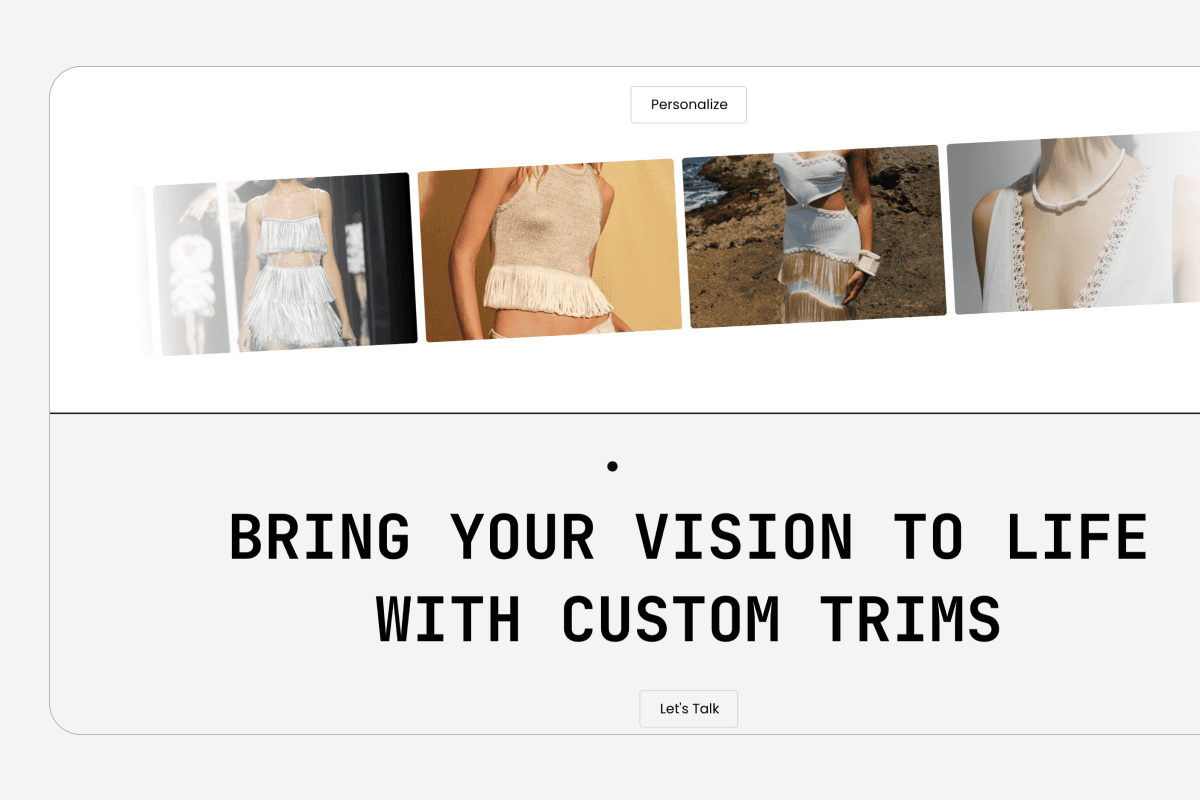
Unclear Value Proposition: Website failed to communicate FB's premium positioning and brand partnerships
Solution
Dual-Platform Approach
Based on our research insights, we developed a comprehensive solution addressing both standard
and custom product needs:
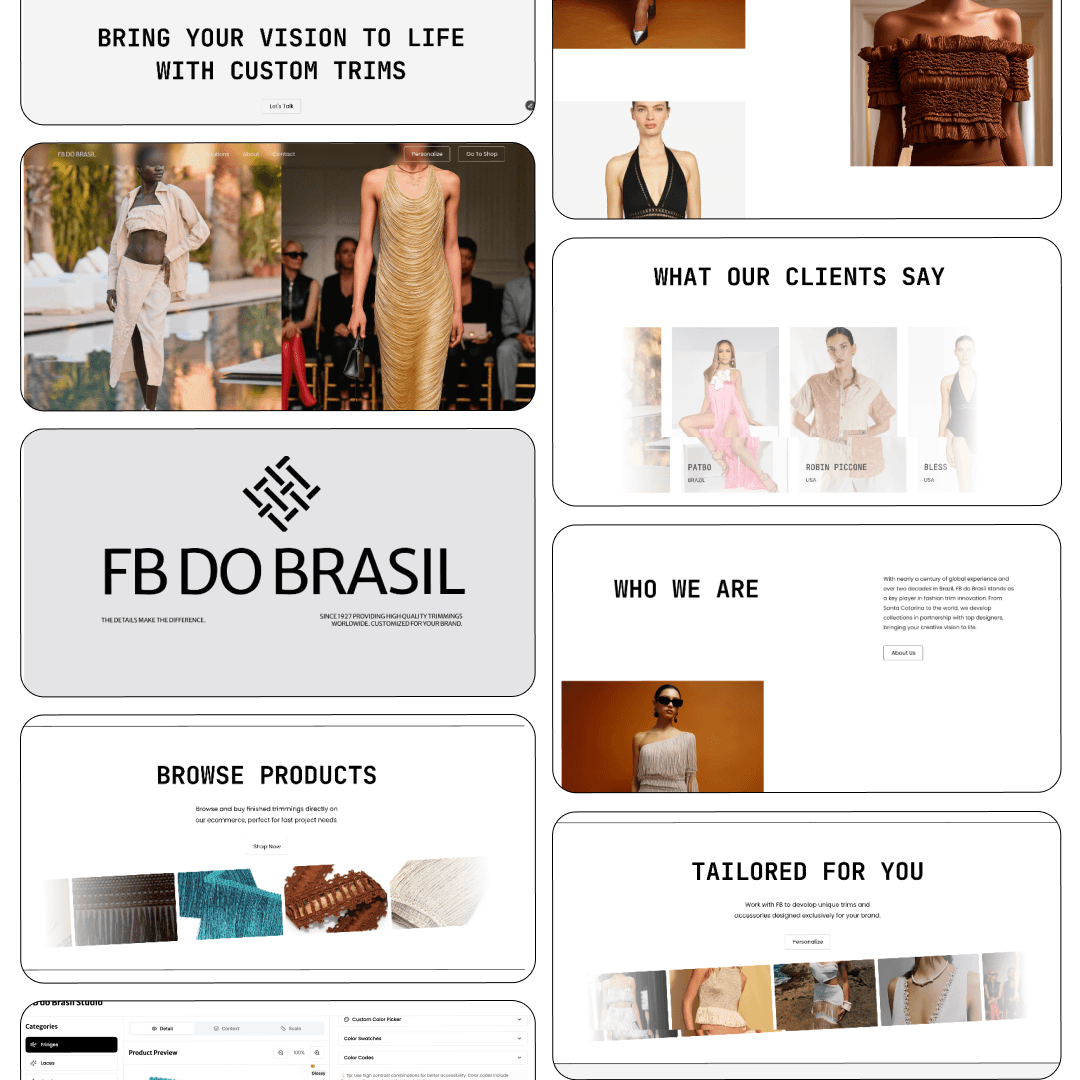
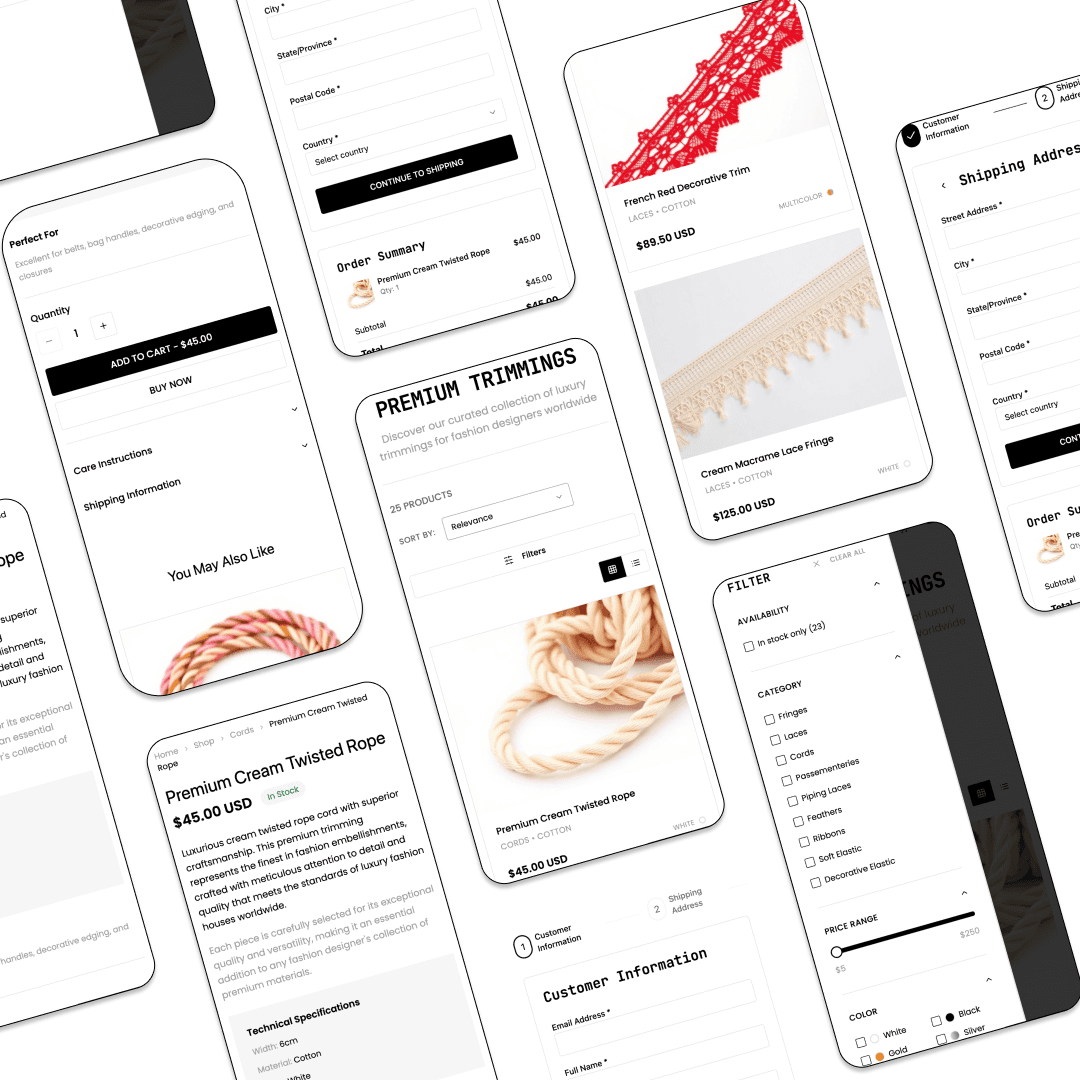
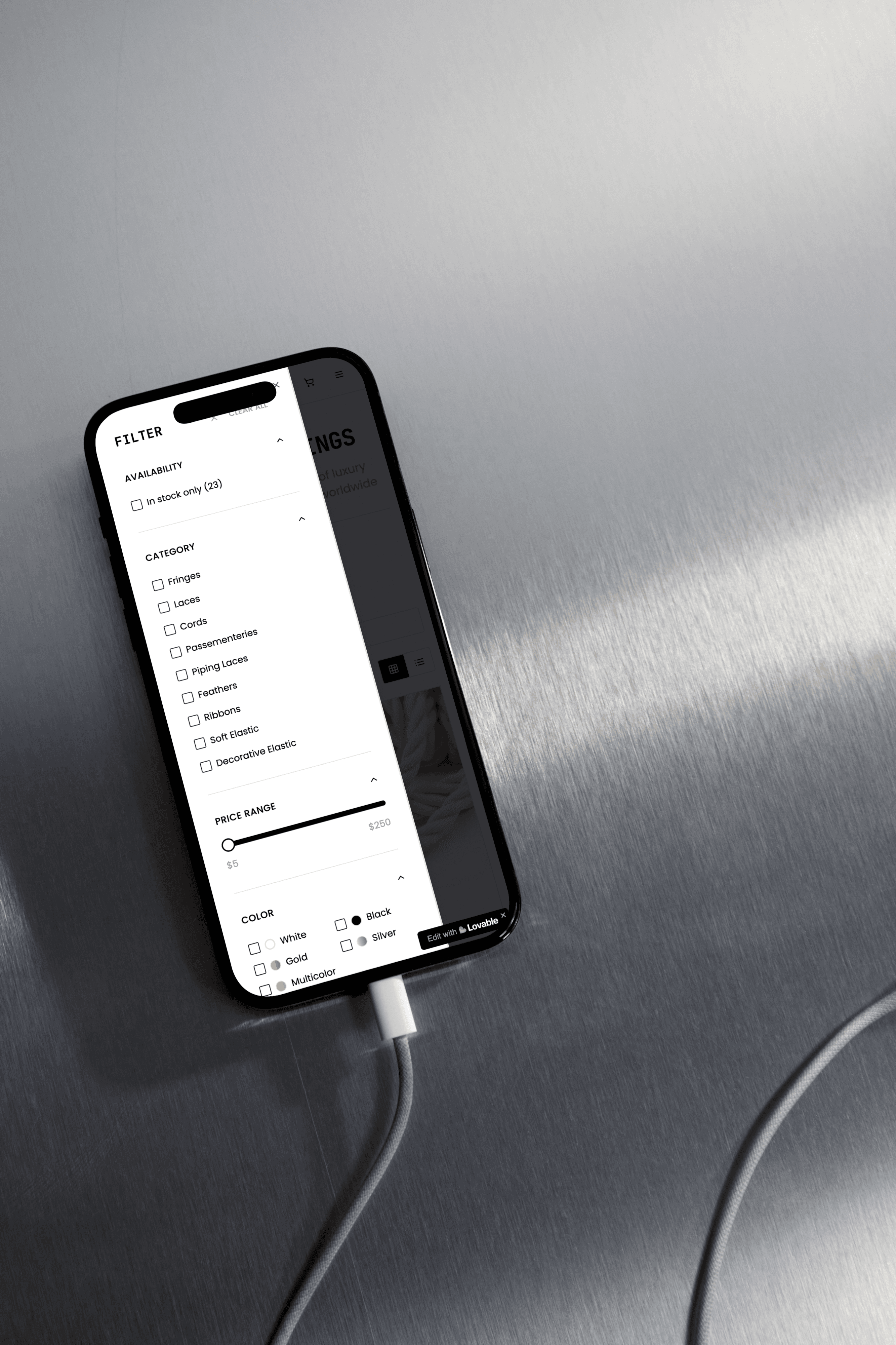
1. Enhanced E-commerce Platform
Complete purchase journey for standard products
Integrated inventory management
Bulk ordering capabilities
Express delivery options for European market
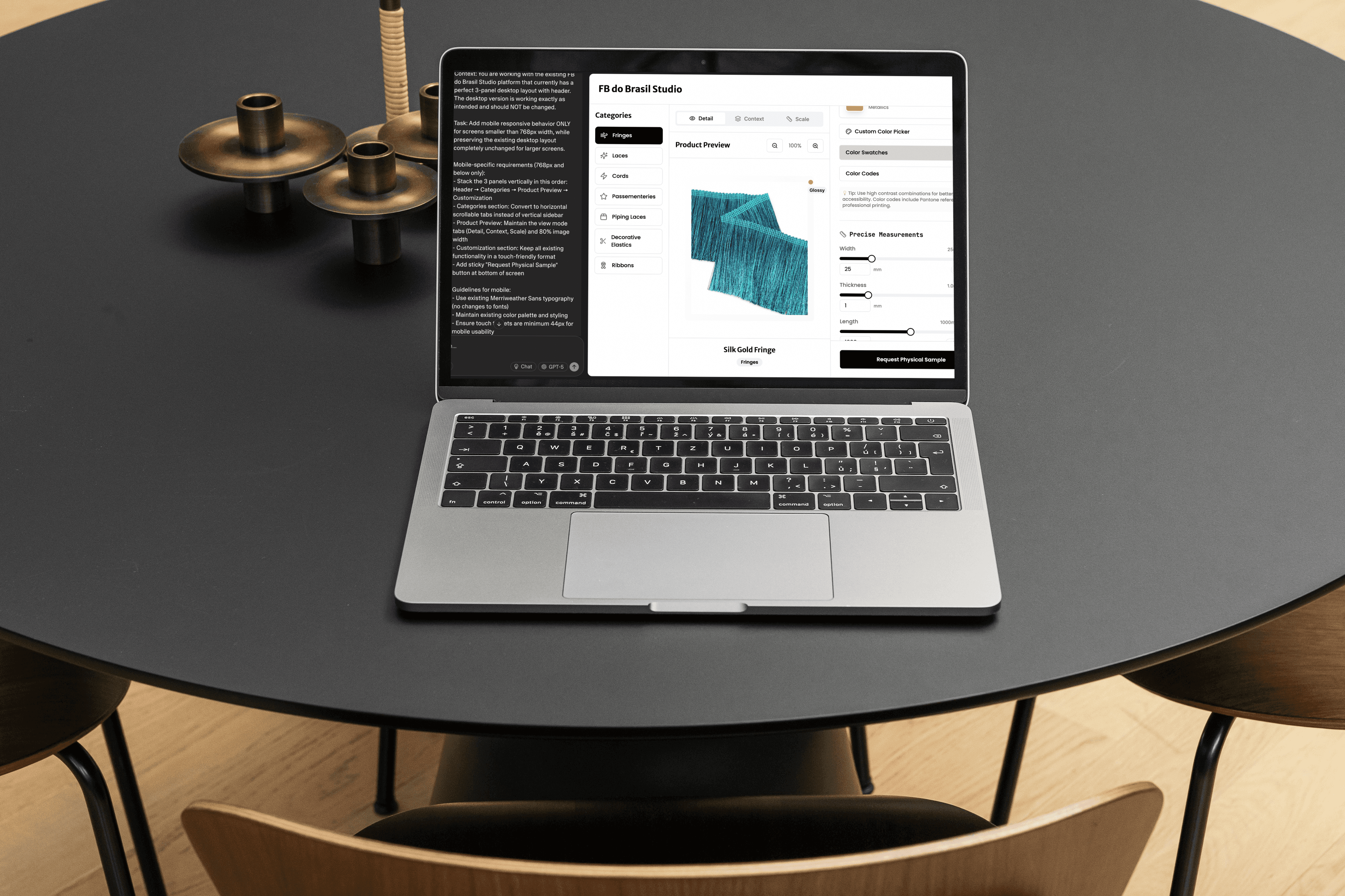
2. FB Studio - Personalization Platform
Custom trimming design interface
Real-time visualization tools
Physical sampling integration
Collaborative design workspace
Key Differentiators:
Speed: Fast delivery to European market
Innovation: Digital personalization studio
Trust: Testimonials from major fashion brands
Quality: Premium materials with guaranteed standards
Process
Research & Analysis: We conducted user interviews, surveys, and analyzed in-app analytics to understand the pain points and user needs. We also studied competitor apps and industry trends to gather insights
Information Architecture: Based on the research findings, we restructured the app's navigation and content, prioritizing features and information according to user needs.
Wireframing & Prototyping: We designed low-fidelity wireframes to visualize the new layout and navigation, iteratively refining them based on user feedback. Afterward, we built a high-fidelity, interactive prototype to test the design.
Usability Testing: We conducted usability tests with a diverse group of users to validate the design and identify areas for improvement. Based on the feedback, we made necessary adjustments to the design.
Visual Design & Style Guide: We developed a cohesive visual language, including color schemes, typography, and iconography, ensuring consistency throughout the app. We also created a style guide to maintain design consistency in future updates.