RxCopilots Website Redesign
UX Design for an AI-Driven Healthcare Solution
RxCopilots is a B2B healthcare technology company providing AI-powered solutions to optimize workflows in specialty pharmacies. I led the UX and UI design for their new marketing website, aiming to clarify their value proposition to VPs and decision-makers in healthcare and drive inbound leads.

Team
1 UX Designer, 1 Developer, 2 Stakeholders
1 month
AI Healthcare Startup
UX & UI Designer (Freelance Consultant)
UX strategy | research | site architecture | visual design
Figma, Framer, Docs, Internal Communication tools for stakeholders
The Problem
RxCopilots had a powerful AI solution—but no clear way to communicate its benefits to enterprise clients.
Their existing web presence lacked structure, visual clarity, and business impact. Key stakeholders were struggling to explain their solution during pitches, and the website failed to convert visitors into leads.
Solution
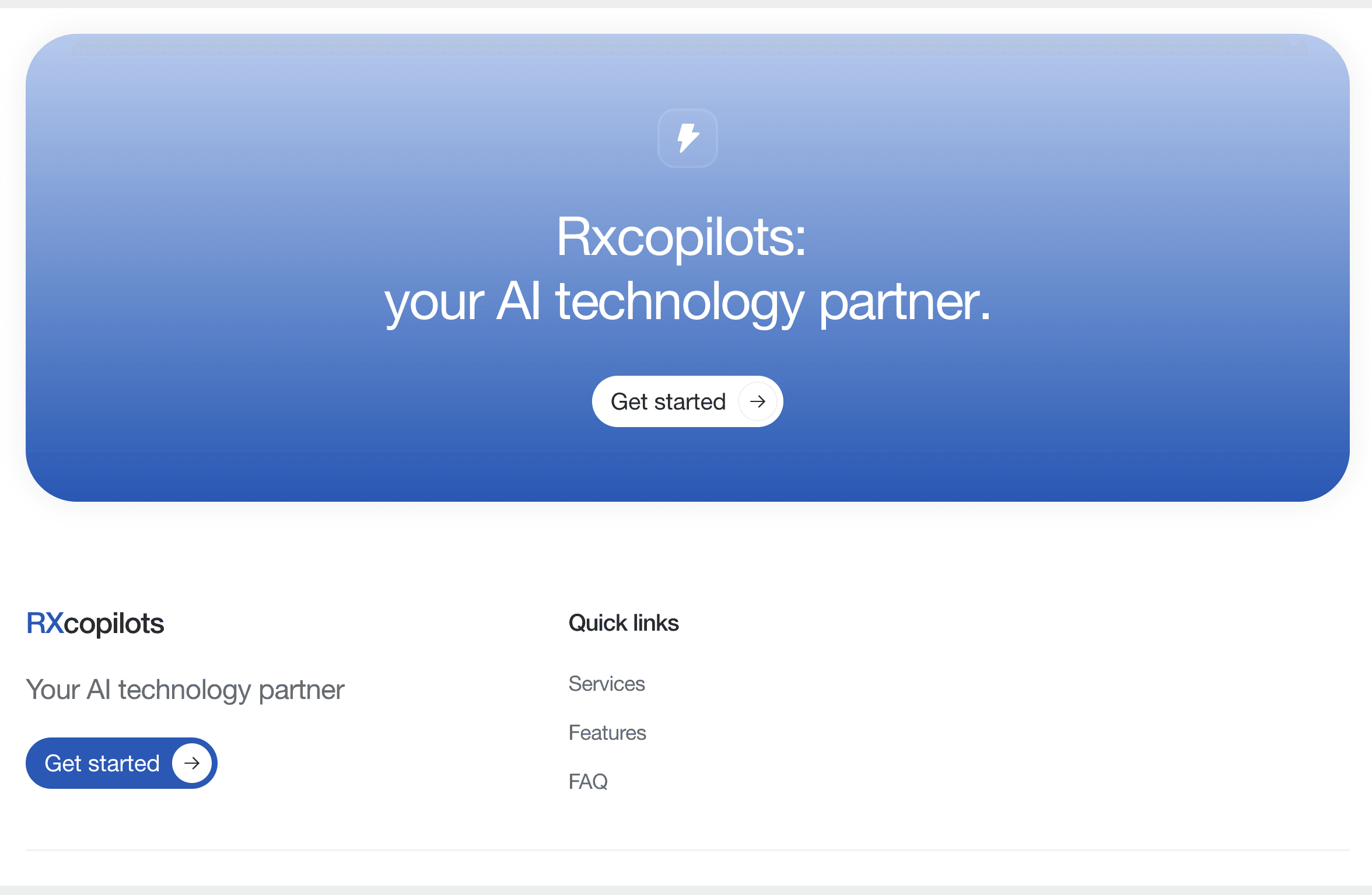
The goal was to create a high-converting marketing website that:
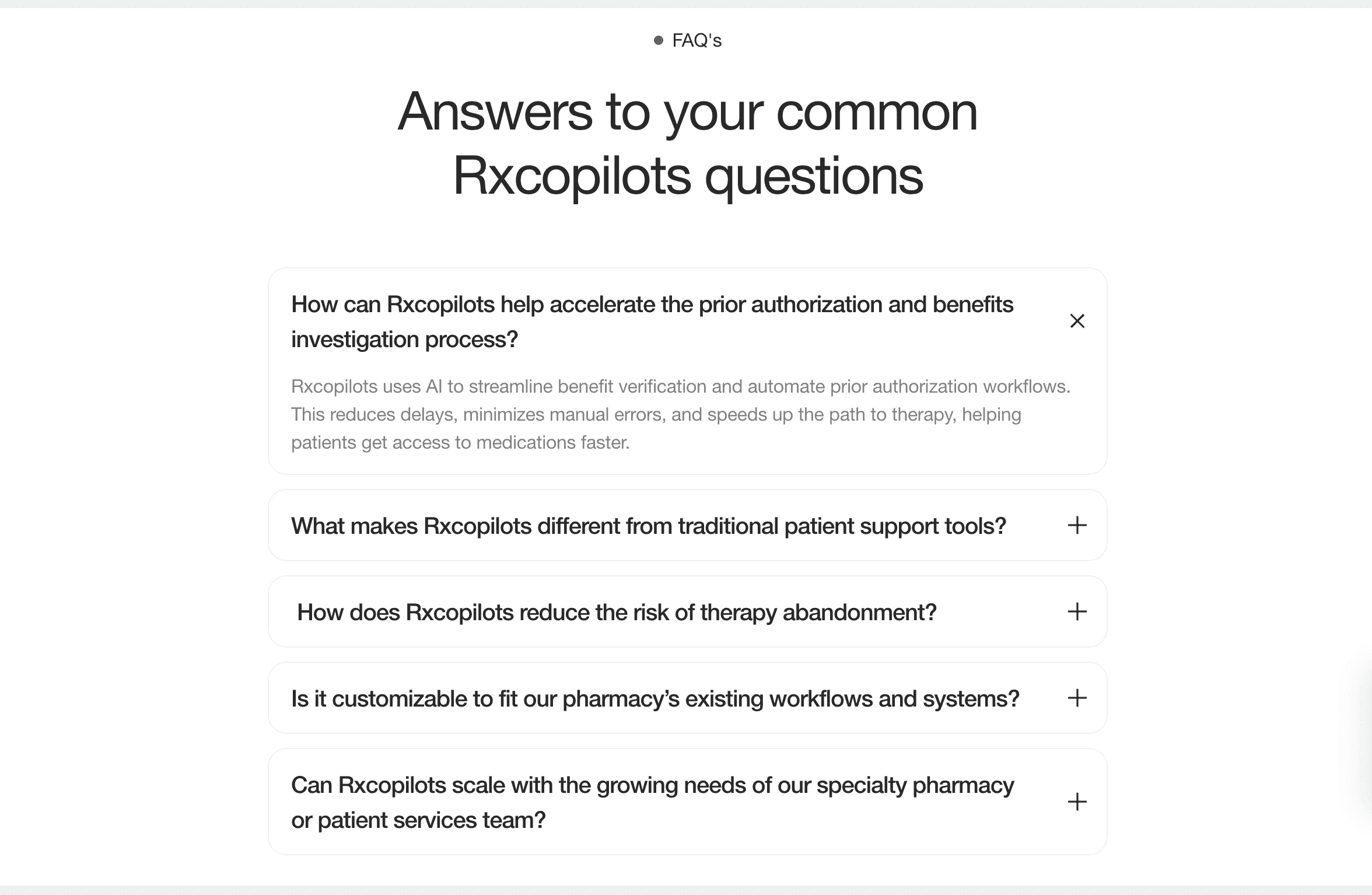
Clearly communicated Rxcopilots’ unique value in a complex B2B healthcare space
Built trust with healthcare executives (e.g., VPs of Pharmacy, Patient Support, Operations)
Positioned Rxcopilots as an innovative partner worth engaging
Generated qualified leads through strategic content and structure
37%
Increase in page engagement
Minimal Iteration
to get to client's goals
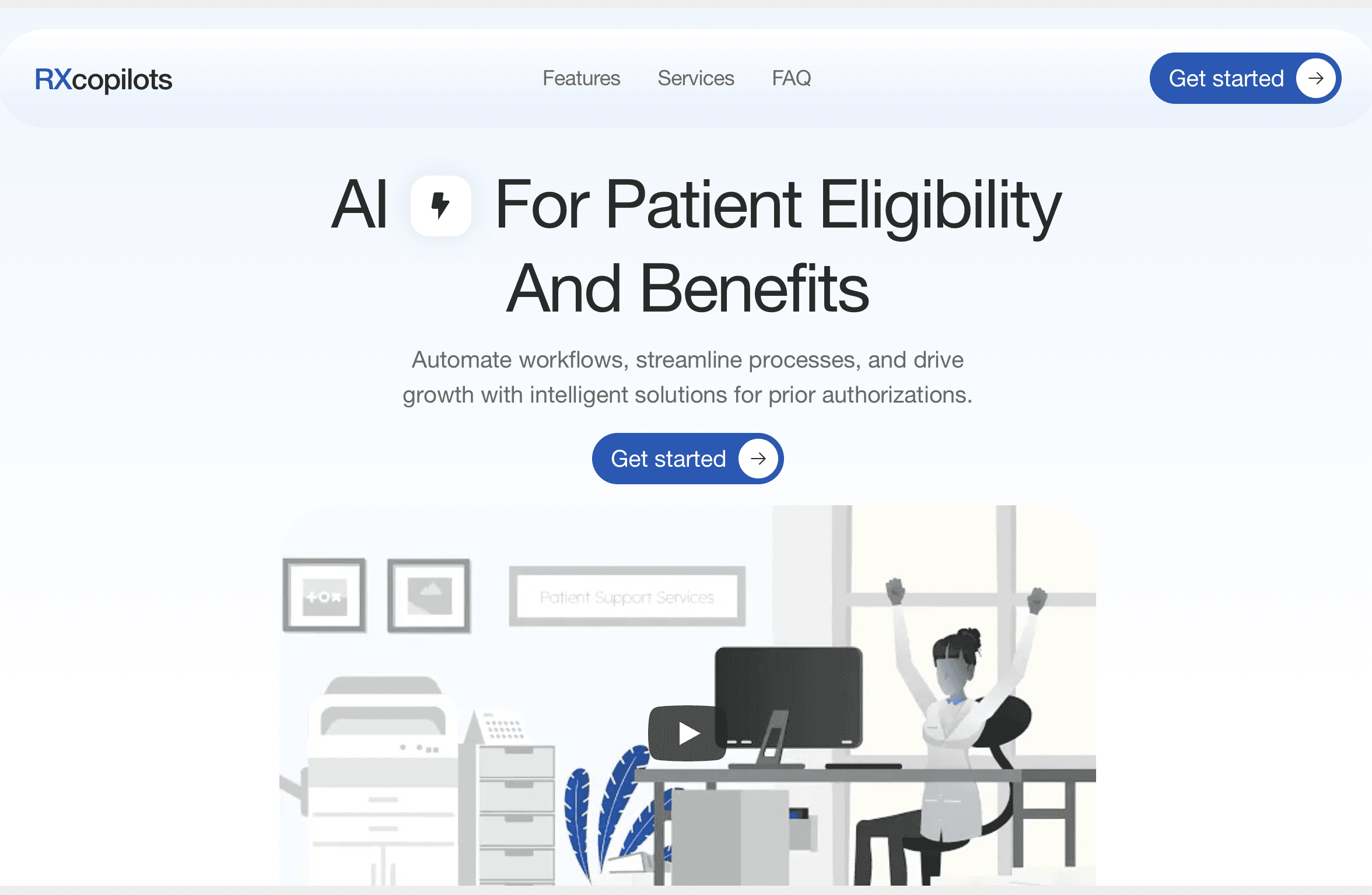
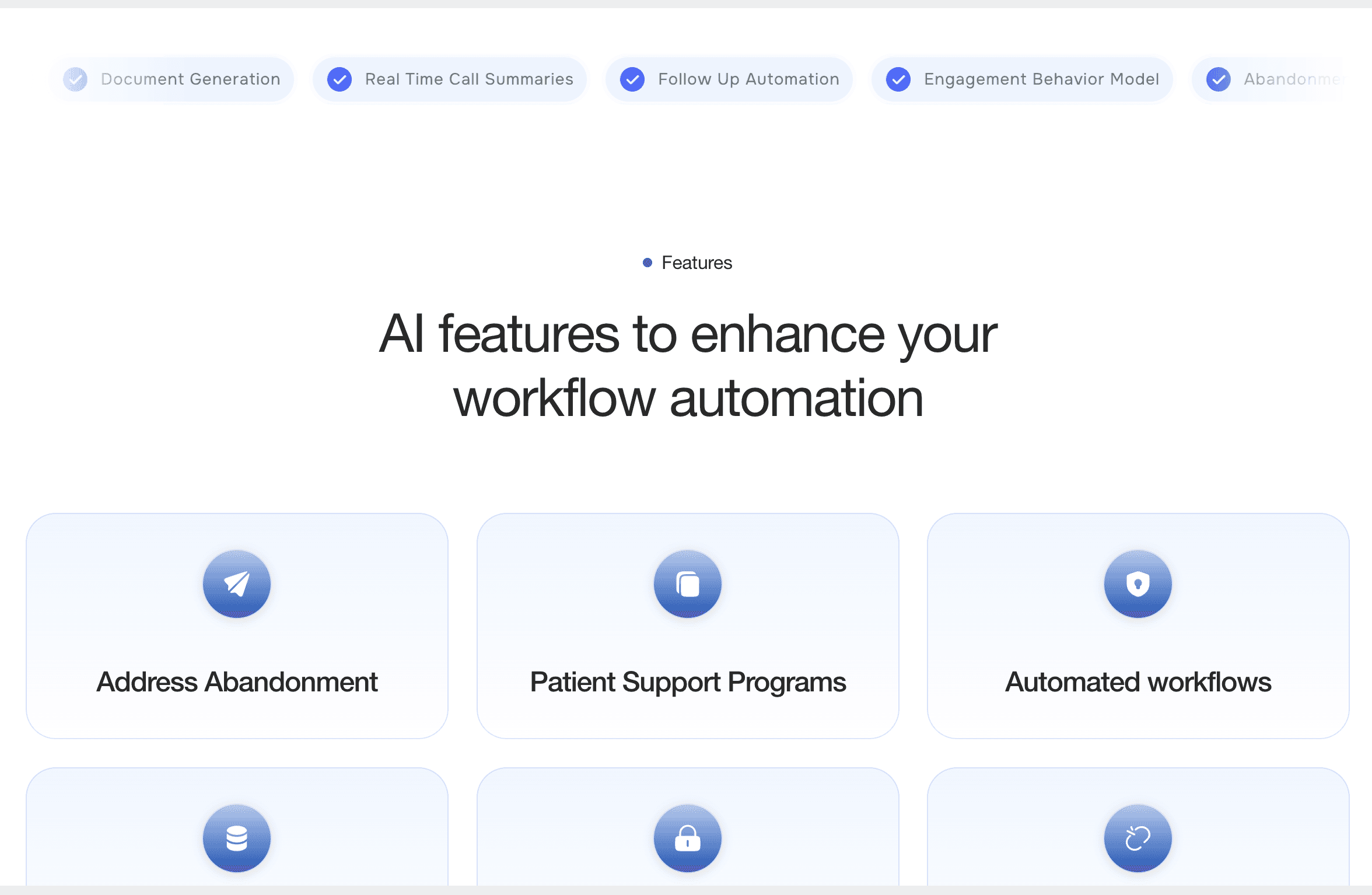
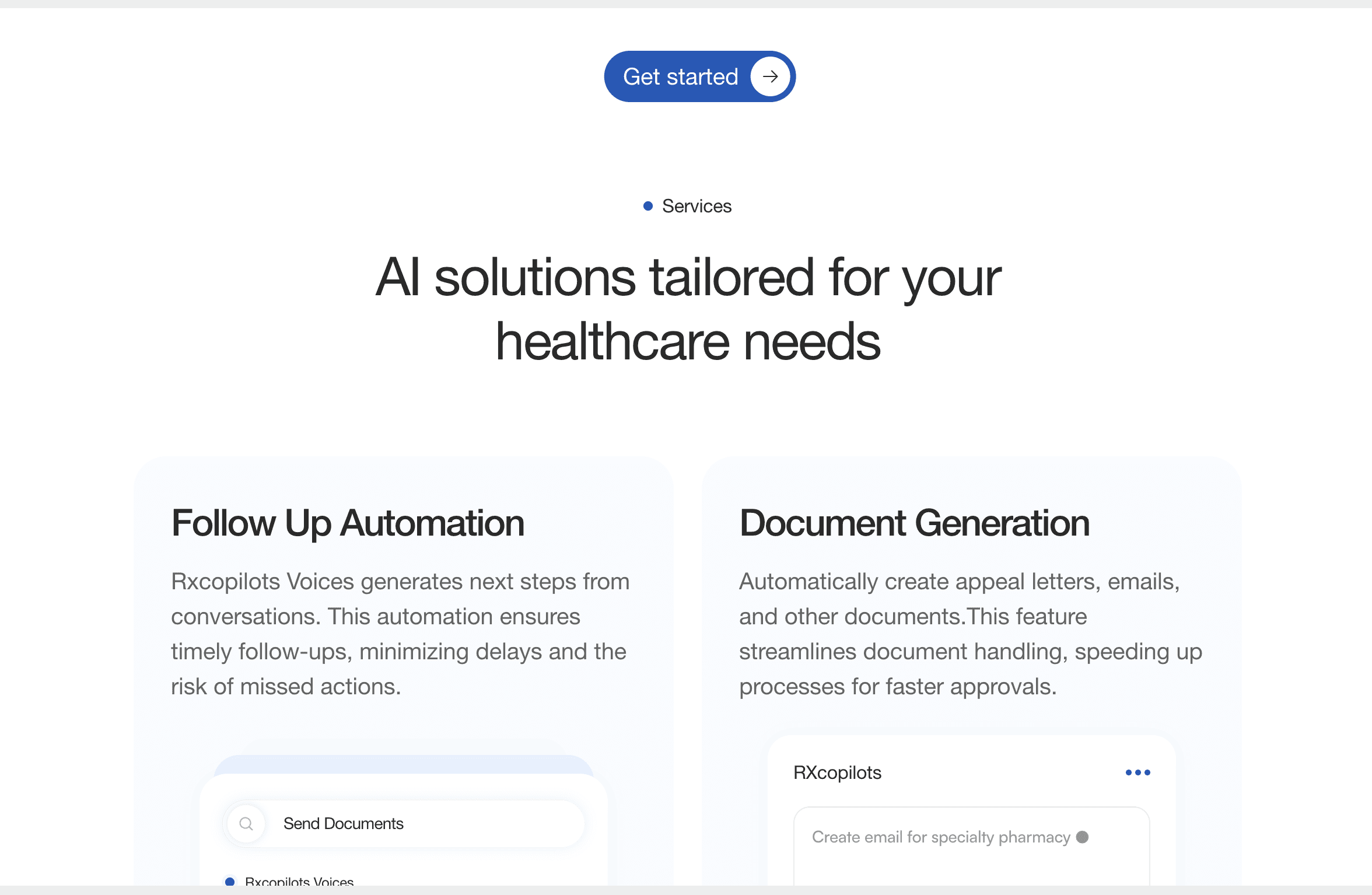
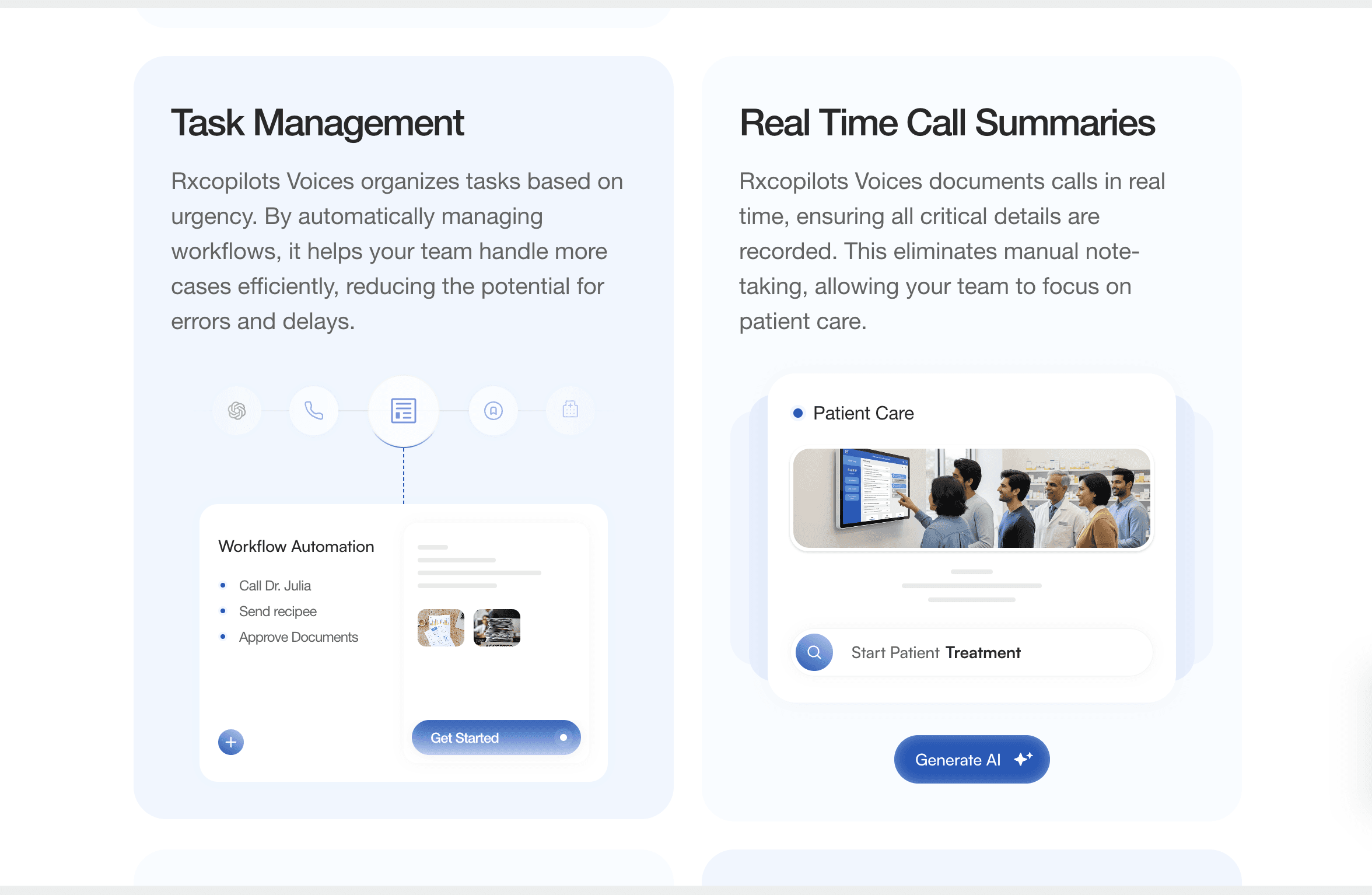
Design Thinking Process
1. Empathize & Understand
I conducted stakeholder interviews to understand the business, the AI capabilities, and the customer pain points. I also benchmarked competitors in the healthtech and patient support space.
Key Research Insights:
Healthcare execs don’t need technical detail first—they need to understand how it impacts operations and patients
Existing AI fatigue in the industry made it critical to present Rxcopilots as specific, practical, and grounded
The current site’s lack of clarity was causing missed opportunities during demo requests and investor conversations
2. Define & Ideate
I mapped the user journey and defined core sections to reflect user and business needs:
Problem → Solution → Features → Trust → CTA
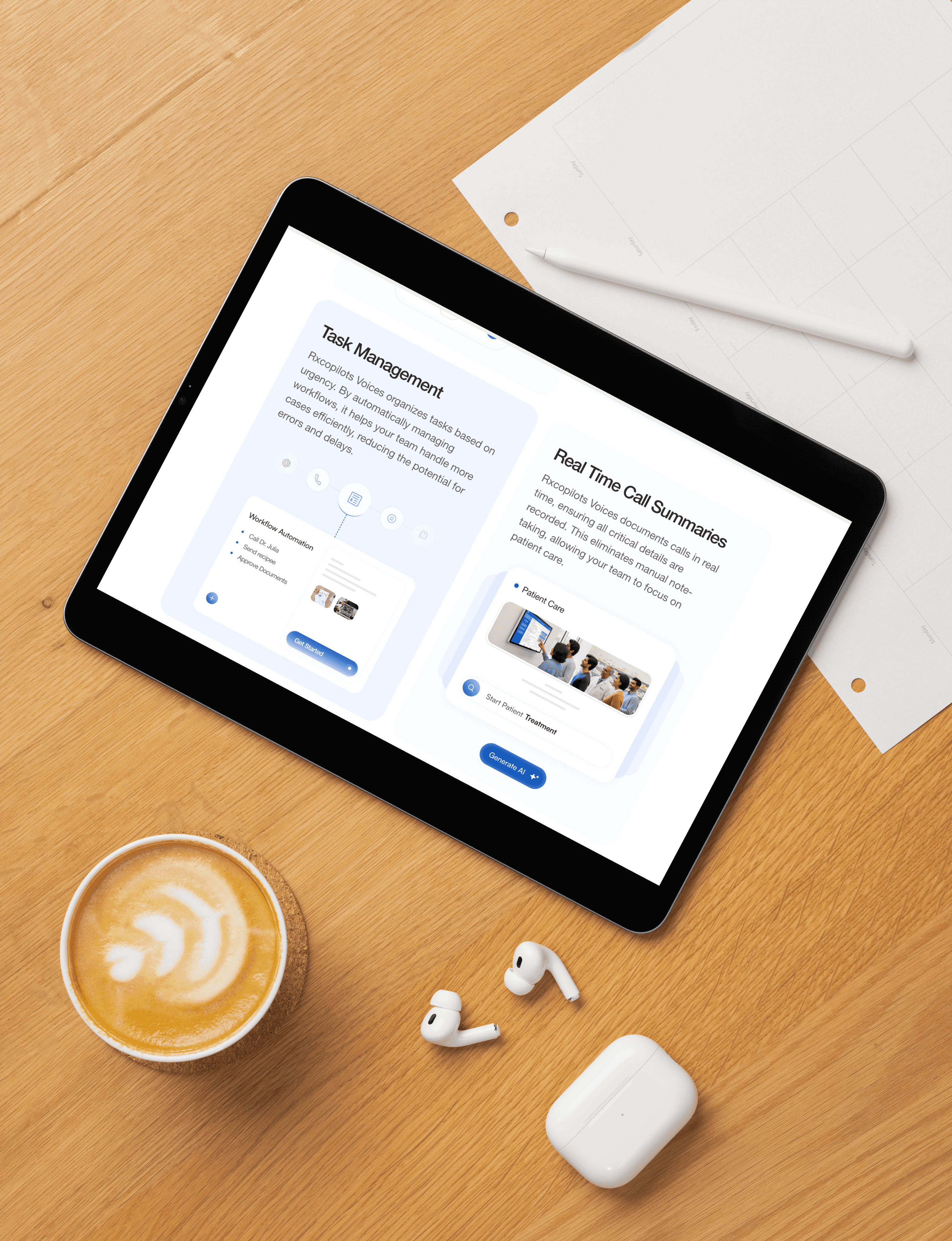
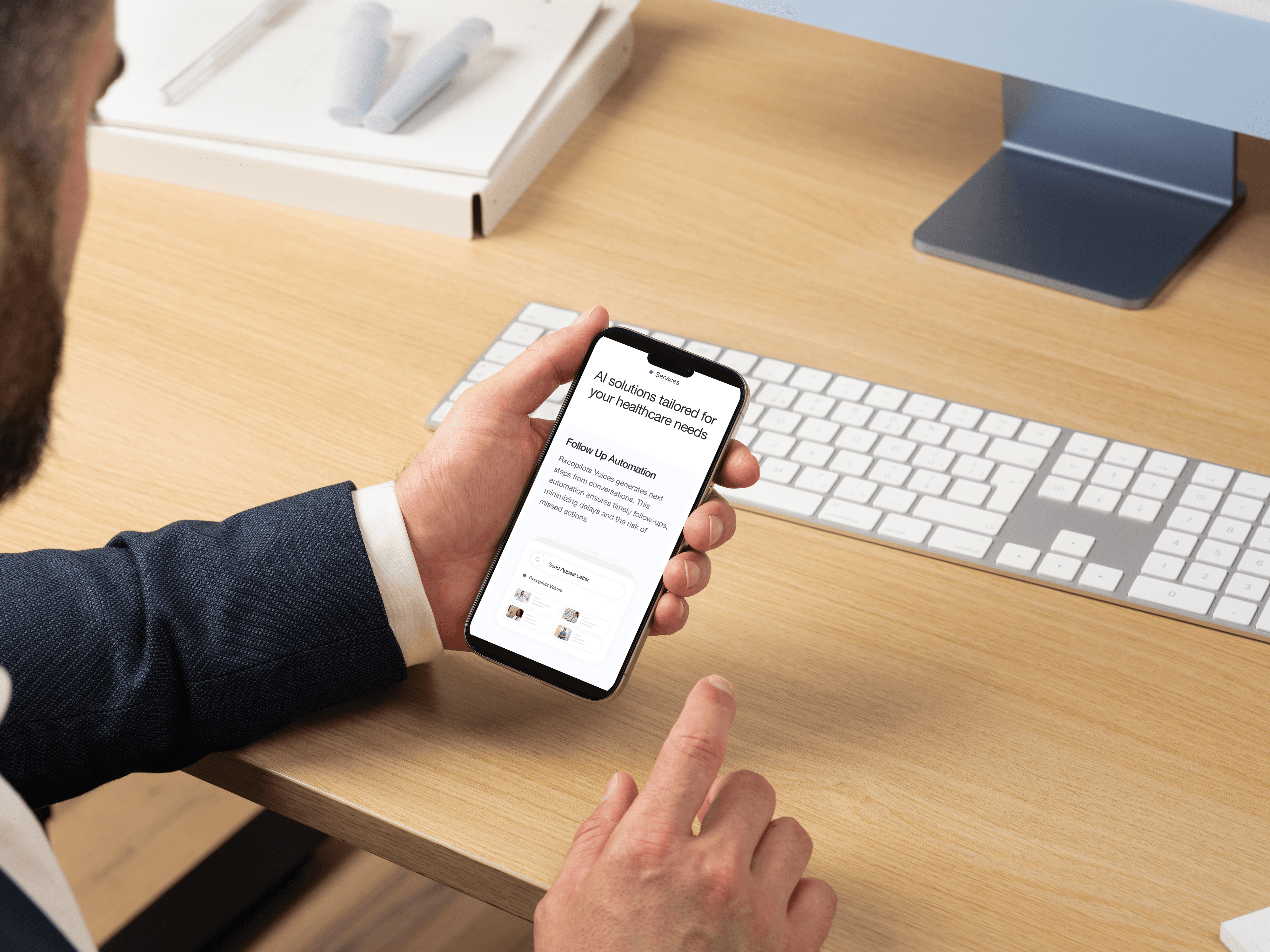
We simplified the message hierarchy and highlighted real-world use cases (e.g., task automation, denials management, benefit investigations).
3. Prototype & Iterate
I designed mid- to high-fidelity wireframes in Figma. One meaningful iteration came after early stakeholder testing:
The original homepage started with technical AI language
After feedback, we rewrote the hero and opening sections to lead with human impact and business efficiency, which made the content more relatable and easier to skim
4. Build & Launch
I worked with the developer to hand off responsive designs, components, and content hierarchy. I also worked with the stakeholders to ensure goals alignment.

Results:
A modern, professional web presence tailored to B2B buyers in healthcare
Clear, structured messaging that helped stakeholders pitch more confidently
Website positioned Rxcopilots as an AI partner with credibility, not hype
Improved lead generation potential through clear CTAs and trust signals.
Conclusion
This project showed how design thinking can turn a technically complex product into a compelling, executive-facing narrative. By bridging the gap between AI capabilities and healthcare operations, I helped Rxcopilots take a critical step toward growth in the enterprise space.